Prior Experience / Idean
Medtronic
Redefining telehealth around patients and the people who care for them.
Medtronic provides at-home monitoring and telehealth services for patients with chronic health conditions. Across two engagements, the team reimagined both sides of that experience: the mobile application patients used to report their health from home and the care management platform clinicians used to monitor patients and manage their work.
The result was a more human-centered telehealth ecosystem designed around very different users with a shared goal: making remote care easier to deliver and easier to receive.
01 / Two Sides of Remote Care
One system. Very different users.
Medtronic's telehealth experience connected patients managing chronic health conditions from home with the nurses and administrators responsible for monitoring their care.
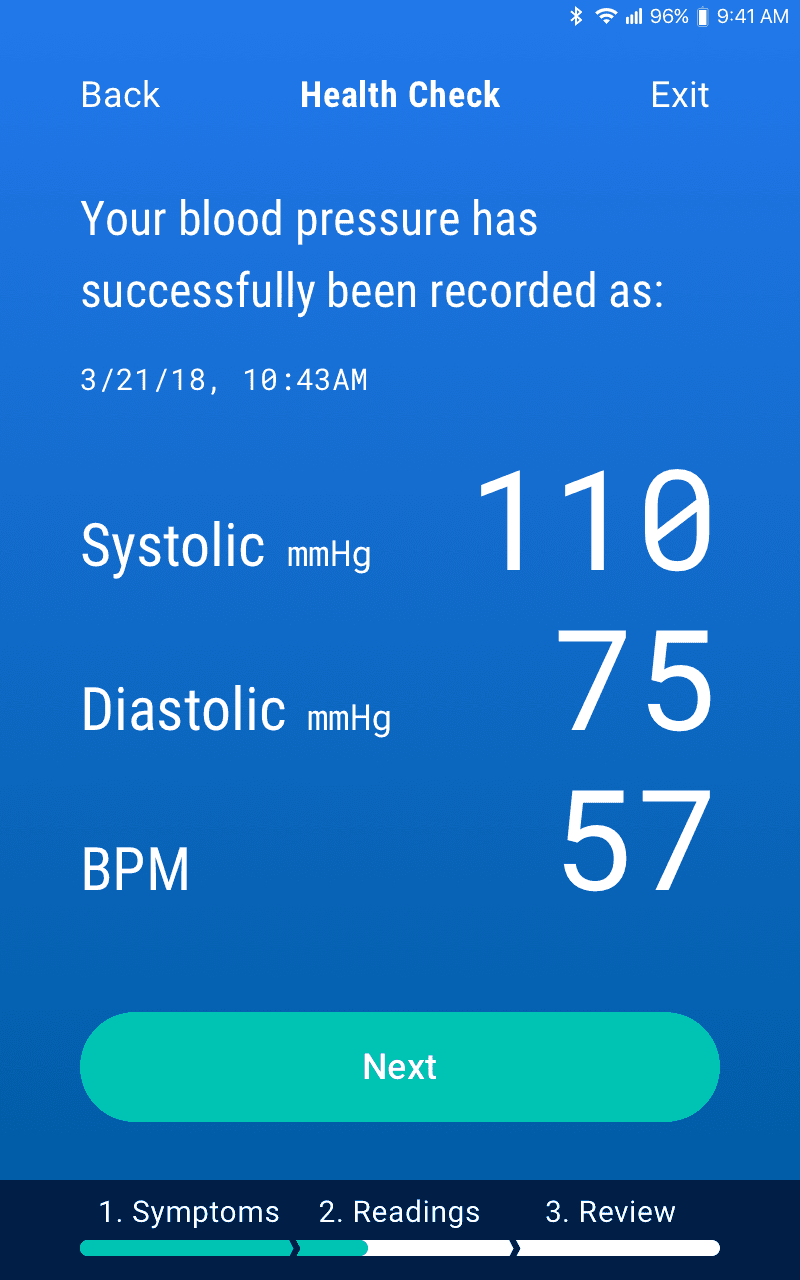
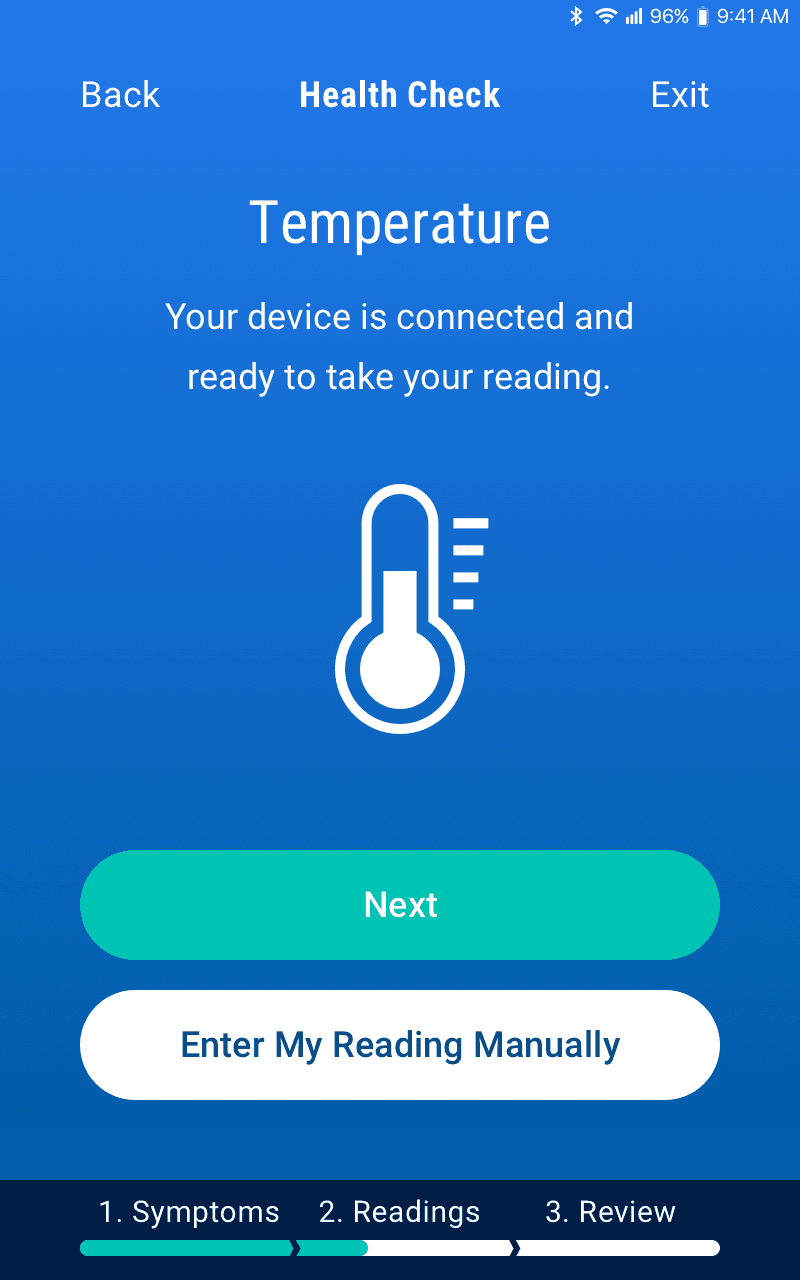
On one side, patients needed a simple way to complete daily health checks and submit readings from connected medical devices.
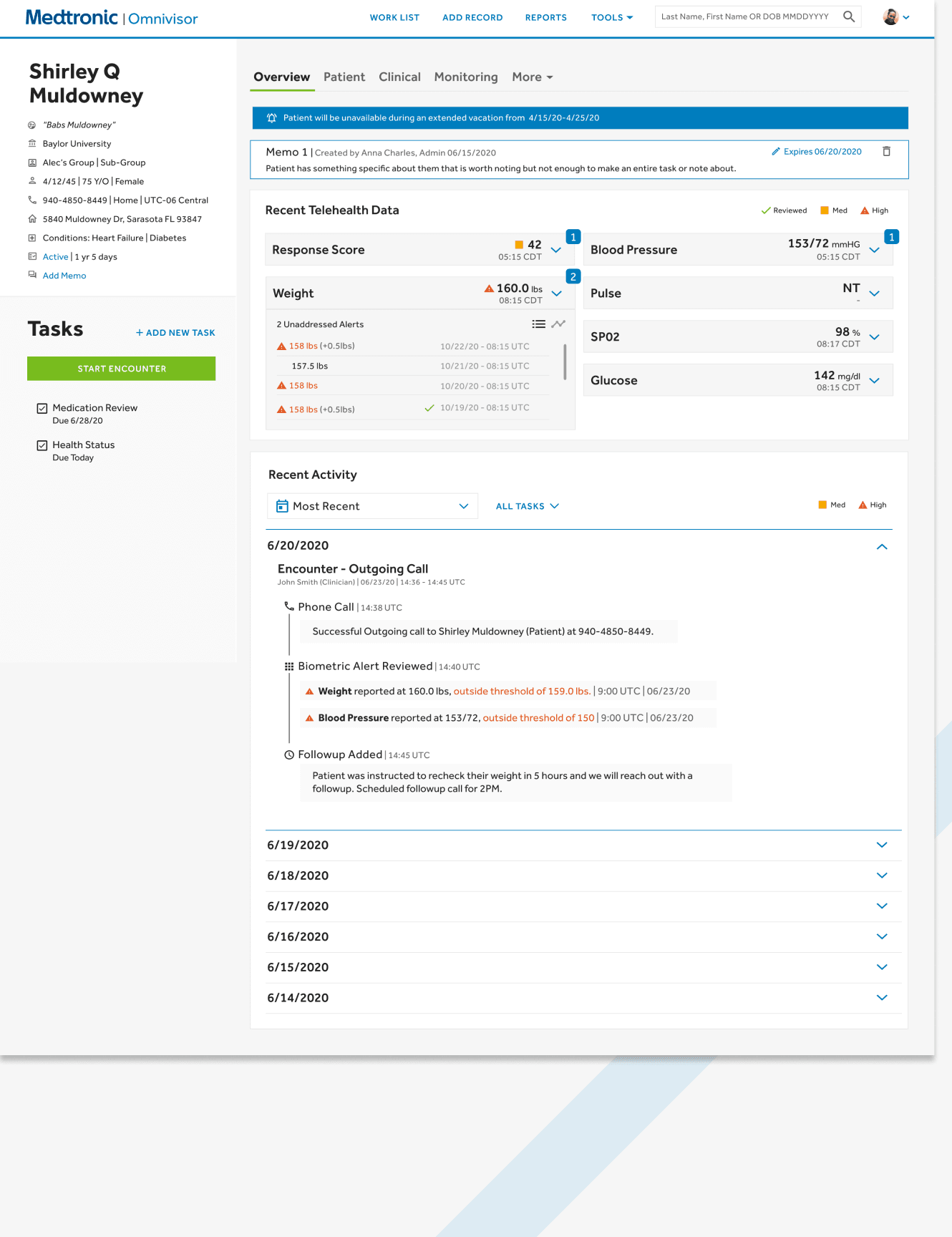
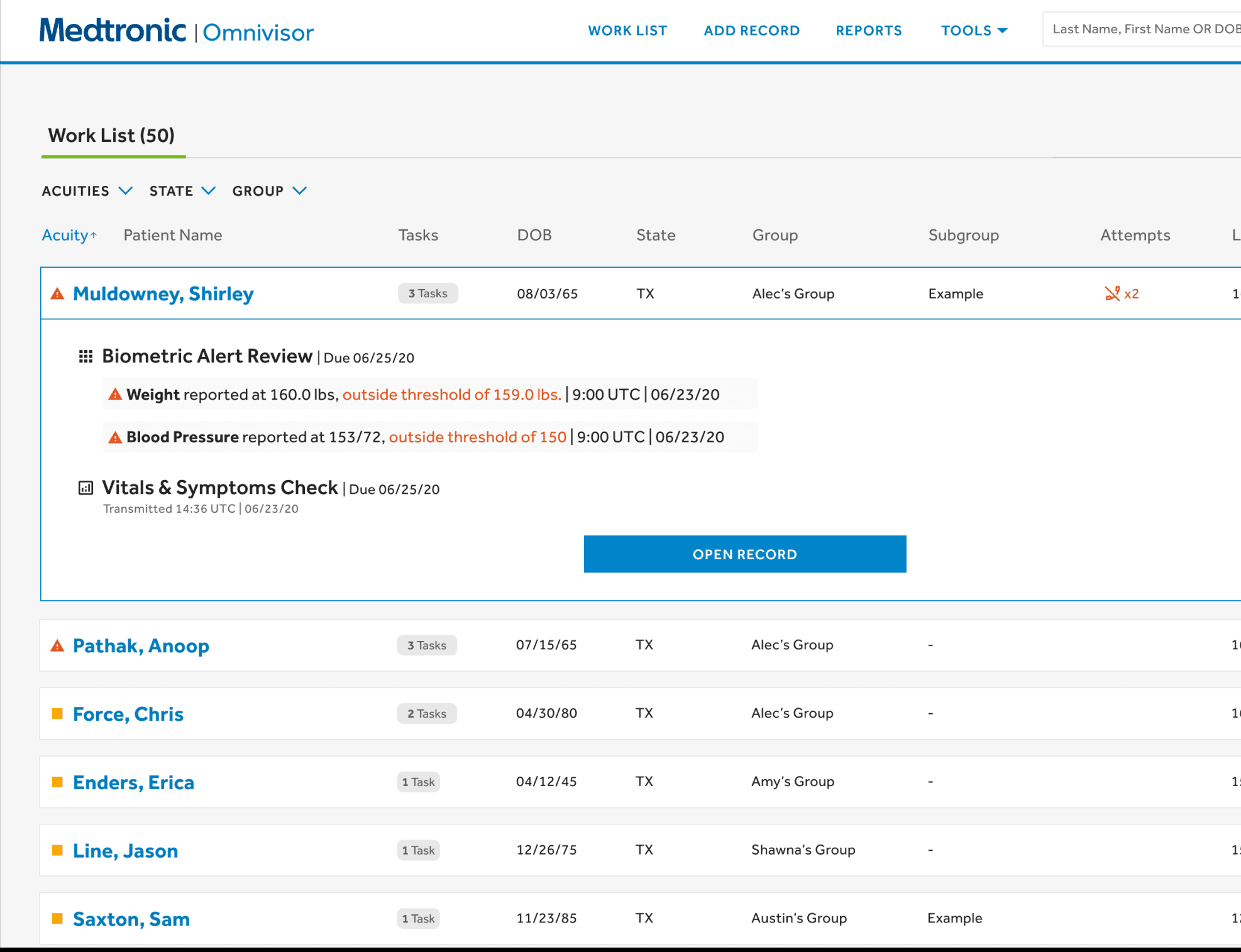
On the other, clinicians needed to monitor patient health, identify issues, manage cases and move efficiently through complex clinical workflows.
The opportunity was to improve both sides of that relationship.
02 / Understanding the Patient
Understanding the needs behind the experience.
The team began by interviewing eight Medtronic employees, including case workers and nurses, to understand the existing NetResponse experience and the challenges patients encountered using it.
Those conversations helped identify the physical and cognitive impairments the experience needed to accommodate and established accessibility as a central consideration for the redesign.
Medtronic employee interviews
03 / Designing & Testing for Accessibility
Making daily health reporting easier.
Insights from the initial employee research informed the redesign of setup, registration and the core Health Check experience.
The application was being used by an aging and potentially impaired patient population, so accessibility needed to shape the experience from the beginning rather than being applied afterward.
Design priorities included removing security as a barrier, empowering patients, making setup easier, encouraging ongoing engagement and providing feedback in context.
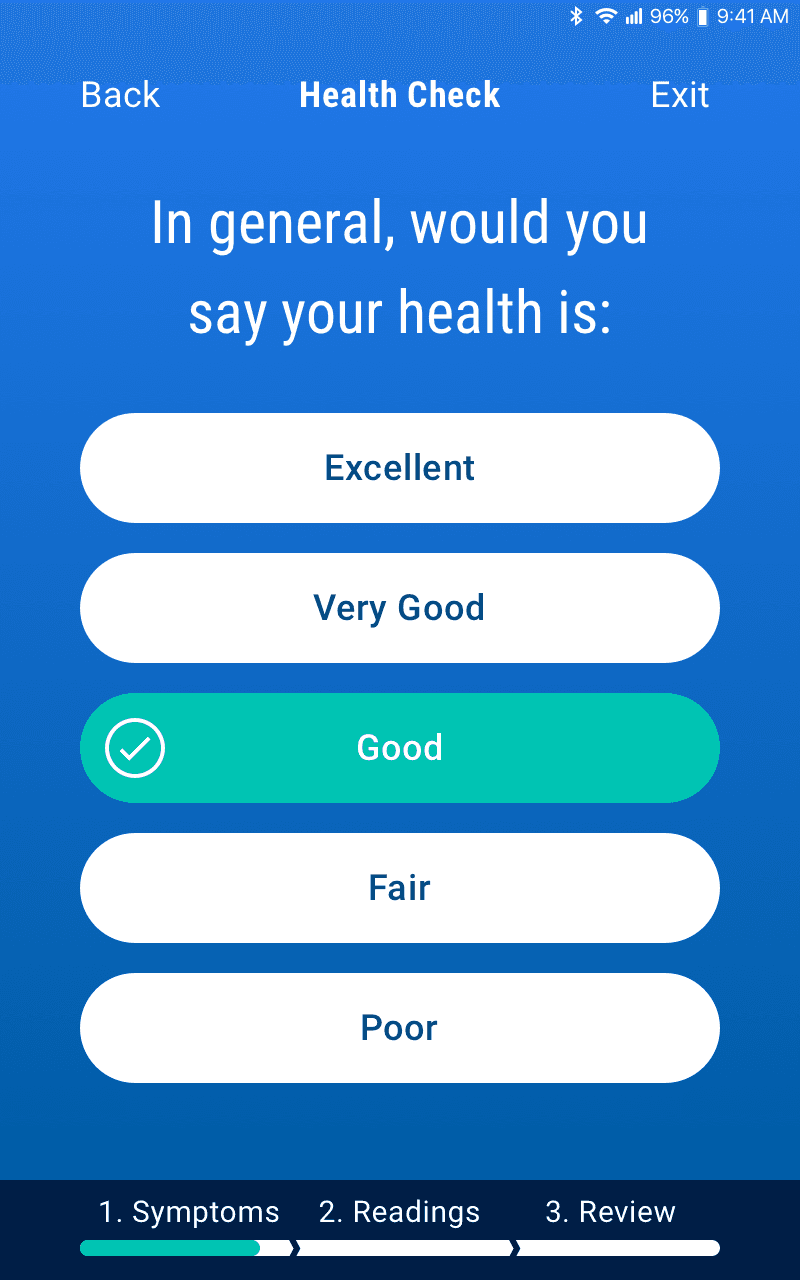
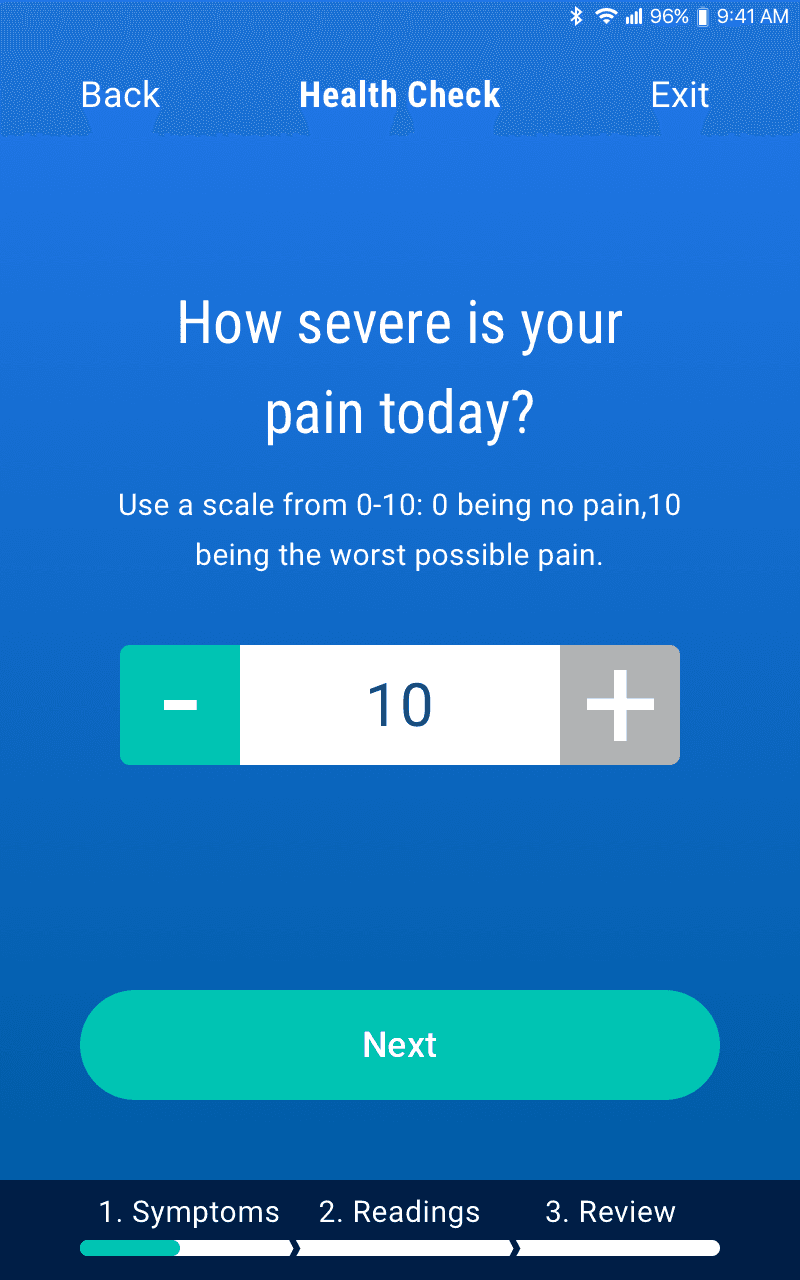
Accessibility had to work outside the design file.
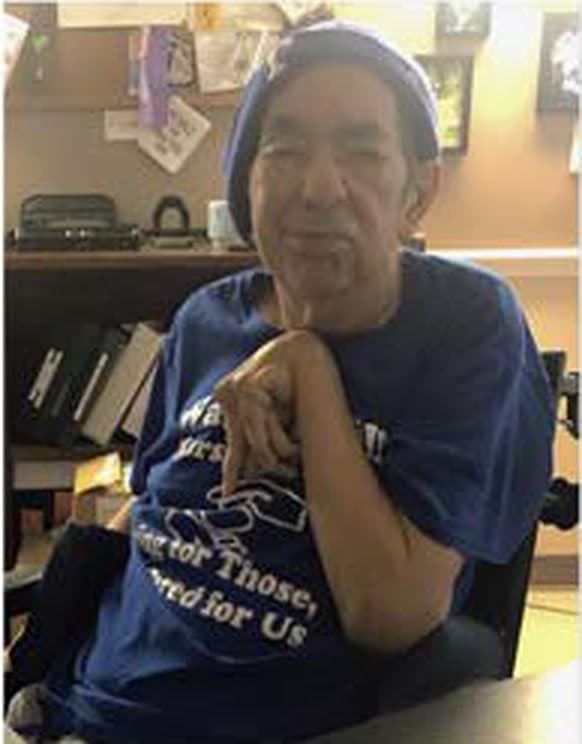
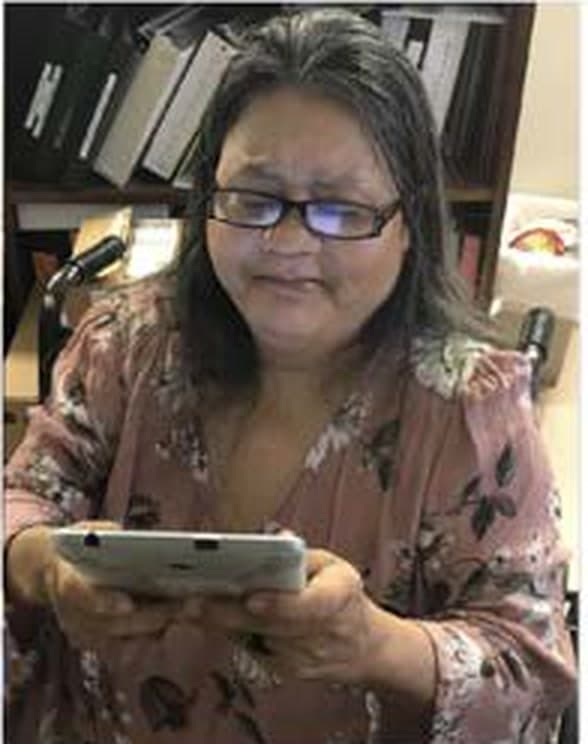
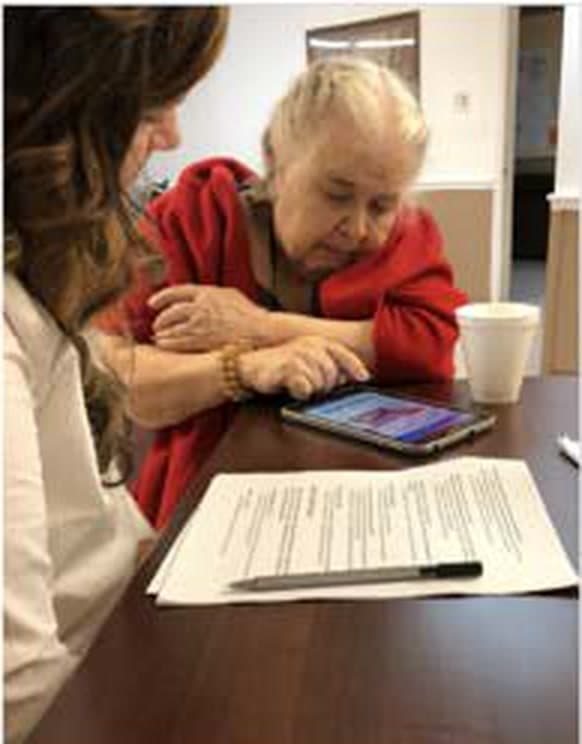
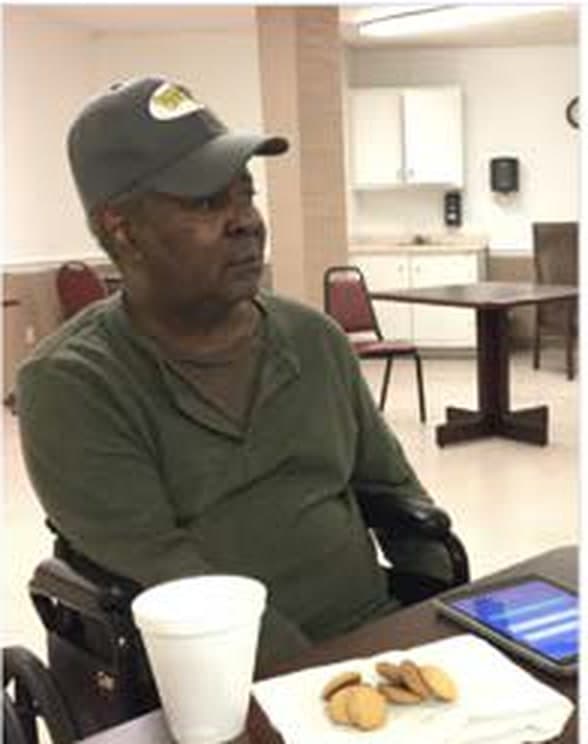
Throughout the project, the team visited a local assisted-living facility to test evolving concepts and designs with older adults.
What the team learned informed iterative changes to both usability and accessibility as the experience developed.
04 / The Clinician Experience
Turning a siloed clinical platform into a more connected care experience.
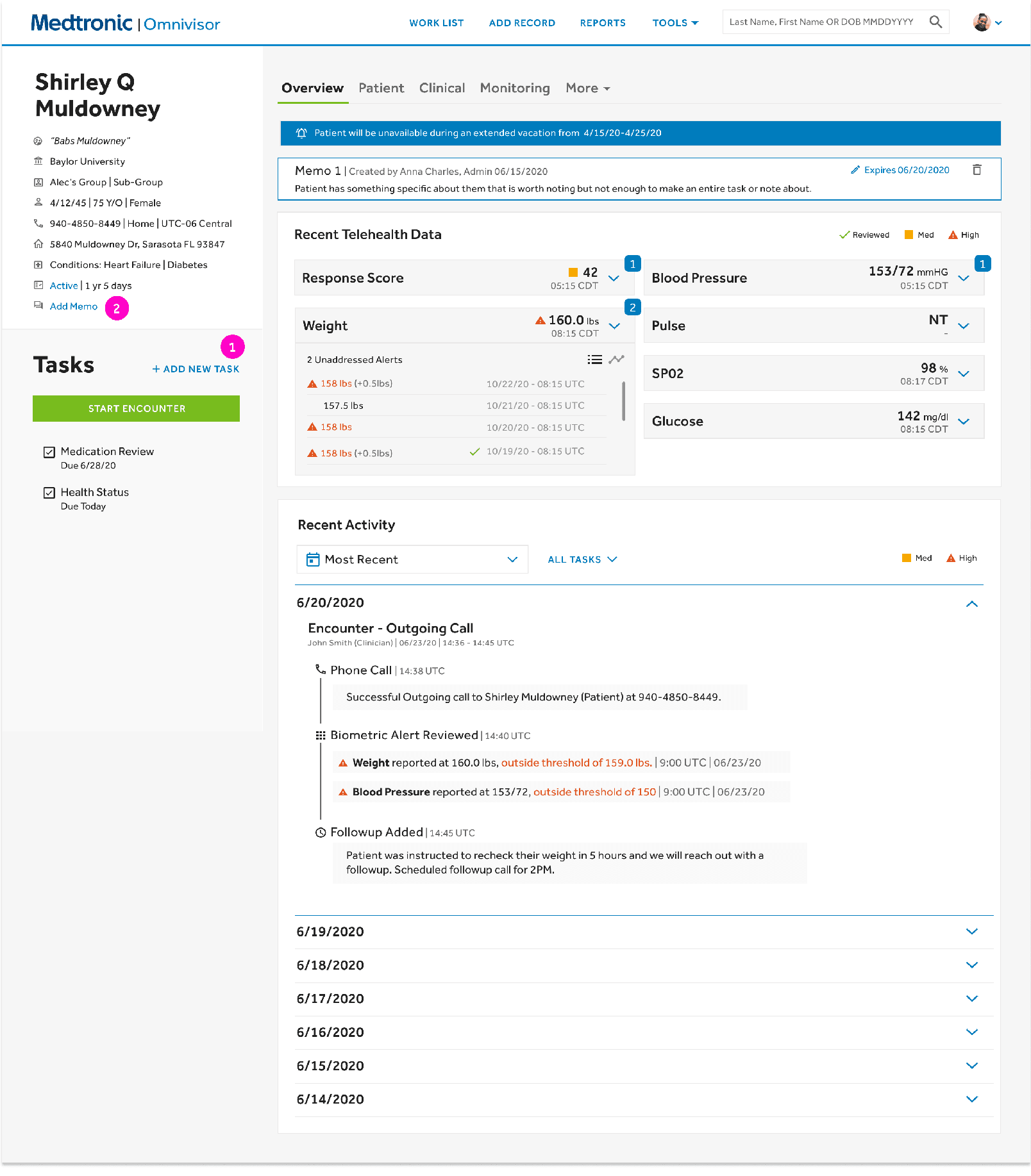
Medtronic's nurses and administrators relied on the NextGen Care Management System to monitor patients, manage clinical workflows and support care remotely.
The existing platform was siloed and inefficient, making already-complex clinical work more difficult. The opportunity was to reimagine the experience around how clinicians actually monitored patients and managed care.
05 / Research to Experience
Grounding a complex platform in how clinicians actually work.
The redesign was informed by user interviews, observations and collaborative working sessions with the Medtronic team.
The team also reviewed existing design guidelines, the competitive landscape and the current platform before conducting a visual and experience audit.
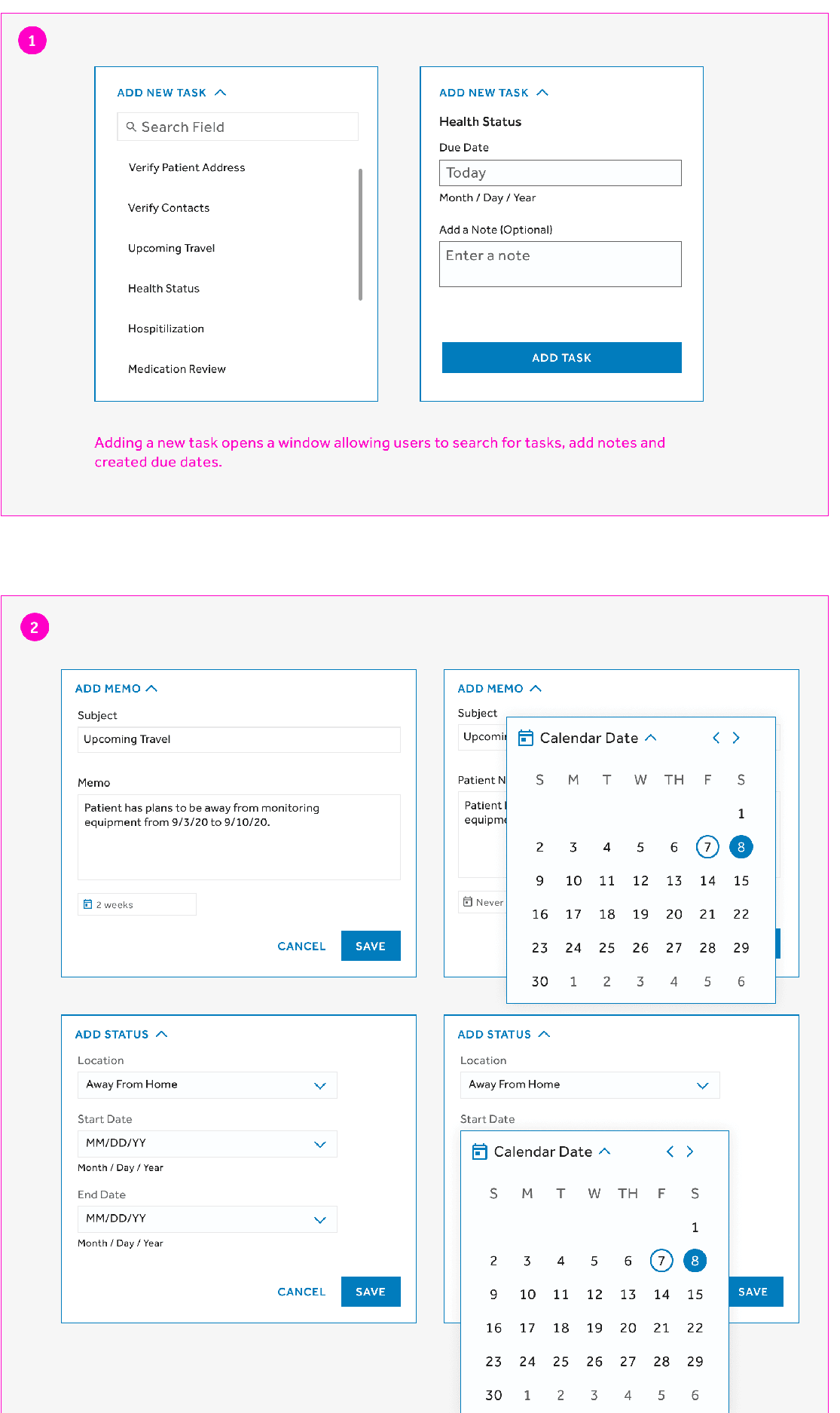
Design progressed from low-fidelity wireframes and prototypes into a new visual direction informed by the Medtronic brand.
Interview + observe
Understand clinical workflows.
Audit + frame
Identify experience and visual opportunities.
Prototype
Explore workflows and interaction models.
Design
Create the detailed clinical experience.
06 / A System for the Experience
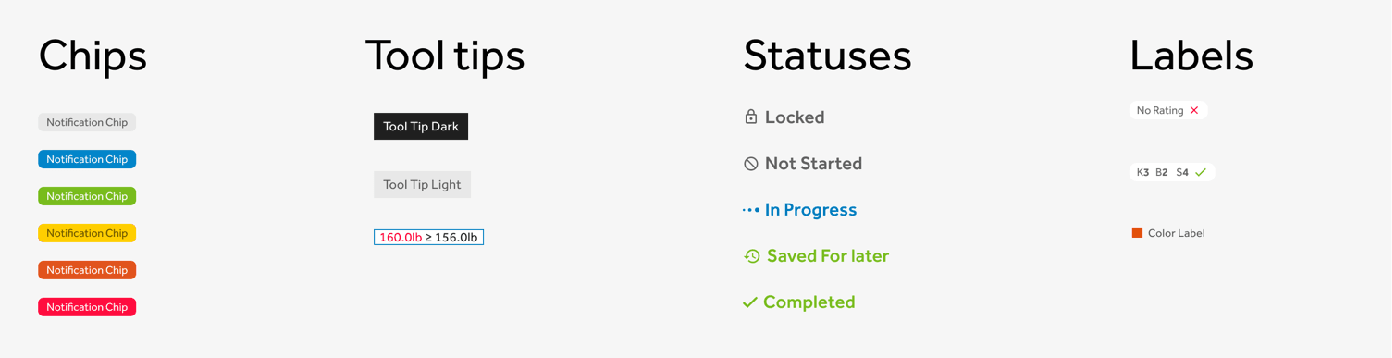
150+ components designed to scale.
The work extended beyond individual screens into a new design system for Medtronic.
The team standardized UX and UI patterns, created a visual component library and documented the system for the development team.
Reusable design-system components
A foundation for the redesigned Care Management platform and future products.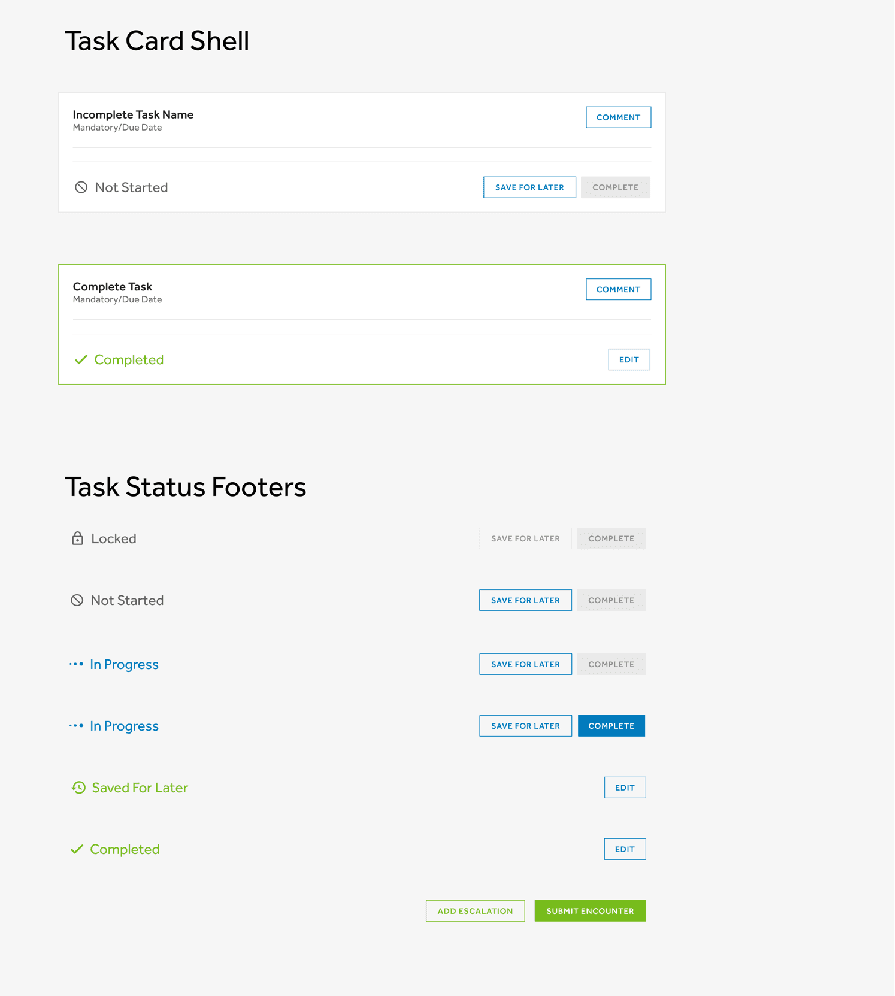


07 / Impact
Better experiences on both sides of care.
The work connected three layers of the remote-care experience: the patient application, the clinician platform and the design-system foundation needed to extend it.
Patient
NetResponse
- Simpler setup
- Accessible daily health checks
- Connected-device readings
- Clearer feedback
Clinician
NextGen CMS
- Patient monitoring
- Clinical workflows
- Case management
- Remote-care support
Foundation
Design System
- 150+ reusable components
- Standardized interaction patterns
- Development documentation
- Foundation for future products
Connected telehealth experiences
Reusable design-system components
Across the patient and clinician experiences, the work made complex telehealth interactions easier to navigate while creating a reusable foundation for future development. NetResponse focused on accessibility, clarity and ongoing patient engagement, while the redesigned clinician experience supported complex telehealth workflows and greater flexibility for future functionality.
Working through a complex product ecosystem?
Stilly helps connect customer needs, product strategy, experience design and technology when the problem spans more than one interface.
Let's talk